Pakistan is facing a diabetes crisis. With over 33 million diabetics — one of the highest rates in the world — it is now rare to find a Pakistani family that has not been touched by this condition. High blood sugar affects the young and old alike and if left uncontrolled it leads to serious complications — heart disease, kidney failure, vision loss and nerve damage.
The good news is that for the vast majority of type 2 diabetics — the most common form in Pakistan — blood sugar can be controlled effectively through simple daily habits. You do not need expensive medicines or complicated routines. Here are 6 practical tips to control blood sugar in Pakistan that any family can follow.
1. Change What is on Your Plate
Pakistani food culture is rich and delicious — but many traditional foods are high in refined carbohydrates and sugar that spike blood sugar rapidly. Small changes in what you eat every day make the biggest difference in blood sugar control.
Eat more of these:
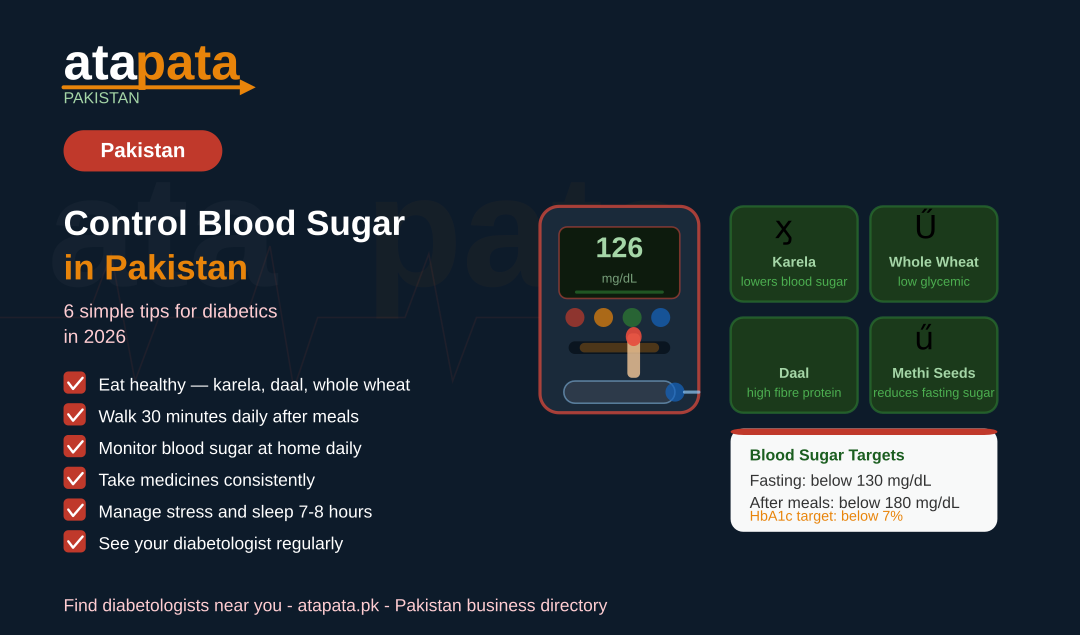
- Vegetables — karela (bitter gourd) is particularly effective at lowering blood sugar — include it weekly. Also add bhindi, palak, ghiya, tinda and salad regularly
- Whole grains — switch white rice to brown rice, maida roti to whole wheat atta roti. Smaller portions of rice rather than eliminating it entirely
- Lentils and pulses — daal is a diabetic's best friend. High protein, high fibre, low glycemic index — keeps blood sugar stable for hours
- Fish and chicken — lean proteins without the saturated fat of red meat
- Fruits in moderation — guava, jamun, apple and papaya are better choices for diabetics than mango, banana and grapes which are high in sugar
Reduce or avoid:
- White rice in large quantities — one of the biggest blood sugar triggers in Pakistani meals
- Maida (refined flour) — naan, paratha, samosa, puri — all spike blood sugar rapidly
- Mithai and sweet dishes — kheer, halwa, barfi — extremely high sugar content
- Sweetened drinks — cola, packaged juices, rooh afza in large quantities — liquid sugar goes directly into the bloodstream
- Ghee and heavy oils — limit daily intake — excess fat worsens insulin resistance
You do not have to give up desi food entirely. Eat smaller portions, add more vegetables to every meal and choose whole grain options wherever possible.
2. Walk Every Day — Even 30 Minutes Helps
Physical activity is one of the most powerful tools for blood sugar control — and it costs nothing. Exercise helps the body use insulin more effectively, burning glucose from the blood for energy.
For most Pakistani diabetics — a simple 30 minute walk every day after dinner is enough to see a meaningful improvement in blood sugar levels within weeks.
- Walk after meals — a 15-20 minute walk after lunch or dinner significantly blunts the blood sugar spike from eating
- Morning walk — fasting blood sugar tends to be lower on days with a morning walk
- No gym required — housework, climbing stairs, gardening — all count as physical activity
- Avoid sitting for long periods — if your job involves sitting all day, stand up and walk for 5 minutes every hour
If you have complications from diabetes — particularly nerve pain in the feet or heart problems — consult your doctor before starting any new exercise routine.
3. Monitor Your Blood Sugar Regularly at Home
Many Pakistani diabetics only check their blood sugar when they visit the doctor — which may be once every few months. This is not enough. Home monitoring gives you real-time information about how your food, exercise and medication are affecting your blood sugar.
- Buy a glucometer — available at pharmacies across Pakistan for Rs. 2,000 to Rs. 5,000. Test strips cost Rs. 30 to Rs. 60 each
- Check fasting blood sugar — first thing in the morning before eating. Target: below 130 mg/dL for most diabetics
- Check 2 hours after meals — target: below 180 mg/dL after eating
- Keep a log — note your readings with dates and times. Share with your doctor at each visit
- Know your HbA1c — this blood test from a lab shows your average blood sugar over 3 months. Get it done every 3-6 months. Target below 7% for most diabetics
4. Take Your Medicines Consistently
A very common problem in Pakistan — diabetics stop taking medicines when they feel well or when blood sugar readings improve. This is dangerous. Blood sugar control requires consistent medication exactly as prescribed by your doctor.
- Never skip doses — even if you feel fine, your blood sugar is being controlled partly by the medication
- Take medicines at the same time every day — consistency improves effectiveness
- Do not self-adjust doses — increasing or decreasing doses without doctor advice can cause dangerous high or low blood sugar
- Tell your doctor about side effects — if a medicine is causing problems, your doctor can switch or adjust — do not stop on your own
- Insulin users — proper storage, correct injection technique and rotation of injection sites are all essential — ask your doctor or diabetic educator to demonstrate
5. Manage Stress — It Directly Affects Blood Sugar
This is one of the least discussed aspects of diabetes management in Pakistan — yet stress is a major trigger for blood sugar spikes. Physical stress, emotional stress, lack of sleep and anxiety all cause the body to release hormones — cortisol and adrenaline — that raise blood sugar.
- Sleep 7-8 hours — poor sleep directly raises blood sugar the following day. This is one of the most underappreciated factors in diabetics
- Namaz and quiet time — regular prayer, breathing exercises and moments of calm during the day help reduce cortisol levels
- Reduce financial and family stress where possible — easier said than done in Pakistan's economic environment, but stress management is a genuine medical necessity for diabetics
- Avoid overthinking about diabetes itself — health anxiety about the condition can paradoxically worsen blood sugar control
6. See Your Doctor and Diabetologist Regularly
Self-management is important — but diabetes requires regular professional oversight. Complications of poorly controlled diabetes — kidney disease, eye damage, nerve damage and cardiovascular disease — can develop silently without obvious symptoms until they are severe.
Tests every diabetic in Pakistan should get regularly:
- HbA1c — every 3-6 months — overall blood sugar control
- Kidney function test (creatinine, urea) — every 6 months — diabetes is the leading cause of kidney failure in Pakistan
- Urine for microalbumin — every year — early sign of kidney damage
- Eye examination (fundus) — every year — diabetic retinopathy can cause blindness if not caught early
- Foot examination — every visit — diabetic foot problems are the leading cause of amputation in Pakistan
- Lipid profile — every 6 months — diabetics have high risk of heart disease
- Blood pressure — at every visit — hypertension combined with diabetes is particularly dangerous
- ECG — annually for diabetics over 40 — to check for silent heart disease
Find a qualified diabetologist — a doctor who specializes in diabetes and hormonal conditions (endocrinologist) — for the best management of your condition. A general physician can manage mild diabetes but complex cases benefit significantly from specialist care.
Diabetes Warning Signs — When to See a Doctor Immediately
Go to a doctor or hospital immediately if you or a family member experiences:
- Extreme thirst and frequent urination — signs of very high blood sugar
- Dizziness, sweating, shaking and confusion — signs of dangerously low blood sugar (hypoglycemia)
- Any wound on the foot that is not healing — diabetic foot emergency
- Sudden blurring of vision
- Chest pain combined with high blood sugar
- Fruity breath, nausea and extreme fatigue — signs of diabetic ketoacidosis (DKA)
Pakistani Foods That Are Good for Diabetics
You do not have to abandon Pakistani cuisine — here are traditional foods that are actually beneficial for blood sugar control:
- Karela (bitter gourd) — contains plant insulin-like compounds, genuinely lowers blood sugar
- Methi (fenugreek) — seeds soaked overnight in water and consumed in the morning help reduce fasting blood sugar
- Jamun (black plum) — seeds ground into powder have blood sugar lowering properties
- Haldi (turmeric) — anti-inflammatory properties help with insulin resistance
- Daal (lentils) — high protein, high fibre, low glycemic — an excellent staple for diabetics
- Zeera (cumin) — cumin water in the morning may help reduce blood sugar levels
- Lehsan (garlic) — raw garlic has modest blood sugar lowering effects
FAQs about Diabetes Control in Pakistan
Can type 2 diabetes be reversed in Pakistan?
In some cases — particularly in people who have had diabetes for a short time and are significantly overweight — substantial weight loss through diet and exercise can bring blood sugar back to normal levels without medication. This is not a cure but a remission. Maintaining this requires ongoing lifestyle commitment. Your diabetologist can advise whether remission is a realistic goal for your specific situation.
Is Pakistani food bad for diabetics?
Not inherently — but traditional Pakistani eating patterns tend to be high in refined carbohydrates, oil and sugar. With modifications — smaller rice portions, whole wheat roti, more vegetables, less mithai and fried food — Pakistani cuisine can be compatible with good blood sugar control.
How often should a diabetic in Pakistan visit a doctor?
At minimum every 3 months for well-controlled diabetes. More frequently if blood sugar is poorly controlled or if complications are present. Annual specialist reviews with full investigations are recommended for all diabetics regardless of how well controlled they appear.
What is the best time to check blood sugar at home?
The most useful readings are fasting blood sugar first thing in the morning — and 2 hours after the main meal of the day. These two readings give a comprehensive picture of blood sugar control throughout the day.
Can diabetics fast during Ramadan in Pakistan?
Many diabetics fast during Ramadan — but this requires careful planning with your doctor. Medication timings, dose adjustments, what to eat at sehri and iftar, and when to check blood sugar during the fast all need to be discussed in advance. Never adjust diabetes medications for Ramadan without medical advice.
Find Diabetologists and Endocrinologists Near You on AtaPata
Browse verified diabetes specialists and endocrinologists across Pakistan on AtaPata — Pakistan's local business directory. Find a qualified diabetologist near you with contact numbers, addresses and clinic timings.