Pakistan-China Pharmaceutical Agreements Reach $850 Million at Islamabad Investment Conference
Pakistan and China have signed pharmaceutical and healthcare agreements worth $850 million during the Pakistan-China Pharmaceutical and Healthcare B2B Investment Conference in Islamabad. The deals focus on local medicine manufacturing, vaccine production, pharmaceutical raw materials, medical devices and technology transfer, with the potential to strengthen Pakistan's healthcare sector over the coming years
⚡ Key Points
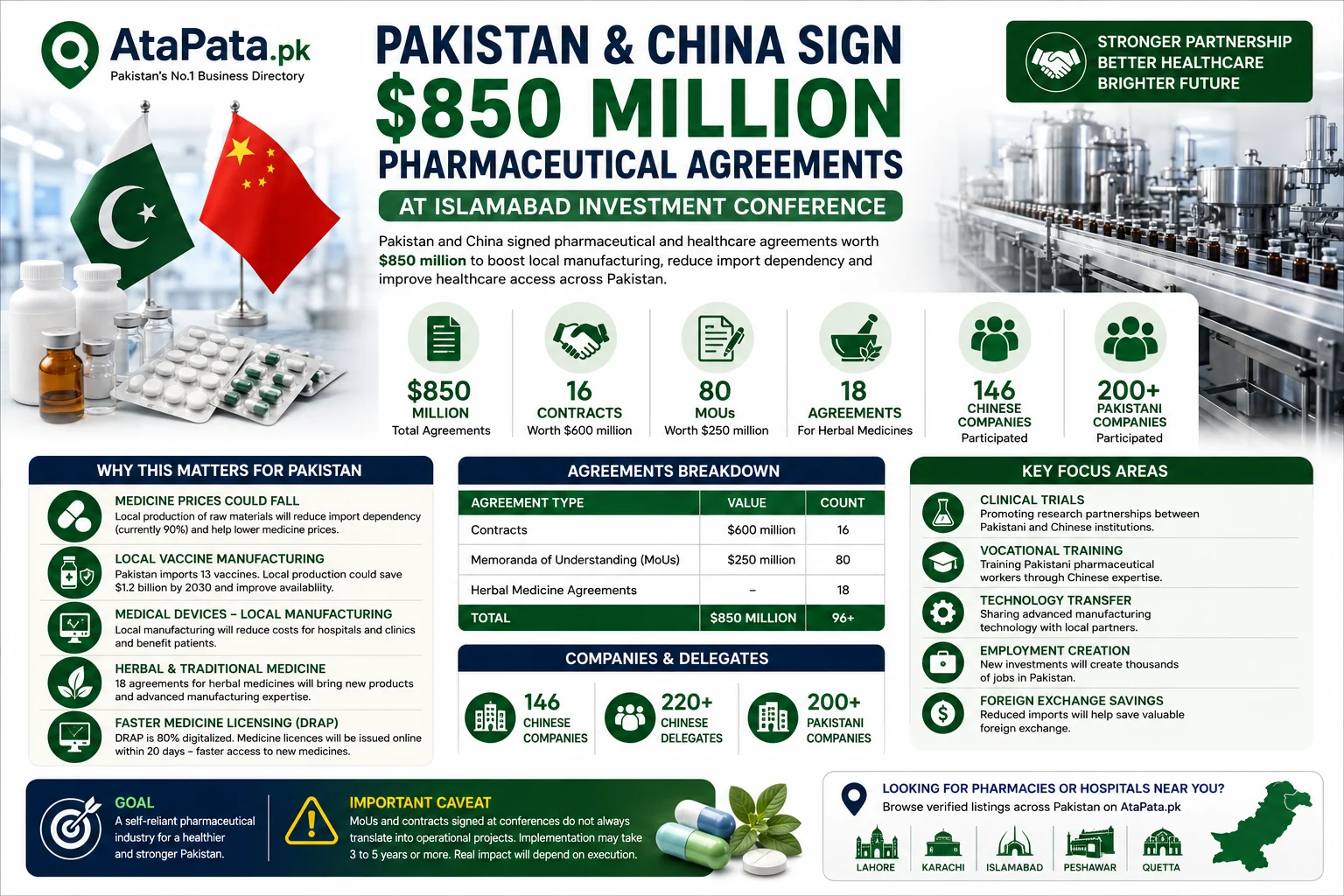
- Pakistan and China signed $850 million in pharma agreements. Total 16 contracts worth $600m and 80 MoUs worth $250m
- 146 Chinese companies and 200+ Pakistani companies participated in the two-day conference
- Pakistan currently imports 90% of pharmaceutical raw materials, agreements target local production
- 18 agreements specifically related to herbal medicines
- Local vaccine manufacturing being prioritized, Pakistan imports 13 vaccines at a projected cost of $1.2bn by 2030
- DRAP now 80% digitalized, medicine licences to be issued online within 20 days
Pakistan and China Sign $850 Million Pharmaceutical Agreements at Islamabad Investment Conference. The two-day Pakistan-China Pharmaceutical and Healthcare B2B Investment Conference concluded in Islamabad on July 19, 2026 with total agreements reaching $850 million, one of the largest Pakistan-China business engagements in the pharmaceutical, healthcare and biotechnology sectors to date.
Federal Health Minister Mustafa Kamal, speaking at the concluding media briefing, described the outcome as a key economic milestone for cooperation between the two countries in the pharmaceutical sector. The agreements also strengthen broader Pakistan-China economic cooperation under the long-standing strategic partnership between the two countries.
What Was Agreed
| Agreement Type | Value | Count |
|---|---|---|
| Contracts | $600 million | 16 |
| Memoranda of Understanding (MoUs) | $250 million | 80 |
| Herbal Medicine Agreements | - | 18 |
| Total | $850 million | 96+ |
Why This Matters for Pakistani Patients
1. Medicine Prices Could Fall
Pakistan currently imports 90% of its pharmaceutical raw materials, primarily from China and India. Every time the rupee depreciates or global supply chains tighten, medicine prices in Pakistan rise. The agreements reached at this conference include deals to produce pharmaceutical raw materials domestically in partnership with Chinese companies. If successfully implemented, local raw material production would reduce Pakistan's dependence on imports and put downward pressure on medicine prices over time.
2. Local Vaccine Manufacturing
| Current Situation | Future Goal |
|---|---|
| Imports 13 different vaccines | Local vaccine production with Chinese partners |
| Vaccine import costs rising annually | Reduce import dependence and save foreign exchange |
| Projected import cost $1.2bn by 2030 | Lower long-term costs through domestic manufacturing |
3. Medical Devices, Local Manufacturing
Local manufacturing of medical devices was also a key agenda item. Pakistan's hospitals and clinics currently rely heavily on imported equipment, locally manufactured alternatives would reduce costs for healthcare providers and ultimately for patients.
4. Herbal and Traditional Medicine
Eighteen specific agreements were signed related to herbal medicines, reflecting growing interest in Pakistan-China collaboration on traditional medicine. China has an advanced herbal medicine industry and these agreements could bring new products and manufacturing know-how to Pakistan's herbal and Unani medicine sector.
5. Faster Medicine Licensing via DRAP
The Drug Regulatory Authority of Pakistan (DRAP) has now digitalized 80% of its services. Health Minister Kamal confirmed that medicine licences will now be obtained online and issued within 20 days of registration, down from a process that previously took months. This will speed up the availability of new medicines in Pakistan and reduce barriers for pharmaceutical companies to register products.
How Many Companies Were Involved
| Participant | Count |
|---|---|
| Chinese companies | 146 |
| Chinese delegates | 220+ |
| Pakistani companies | 200+ |
What Was Also Discussed
- Clinical trials, promoting clinical trial partnerships between Pakistani and Chinese research institutions
- Vocational training, training Pakistani pharmaceutical workers through Chinese expertise
- Technology transfer, Chinese companies sharing manufacturing technology with Pakistani partners
- Employment creation, local manufacturing investment expected to create significant jobs in Pakistan's pharmaceutical sector
- Foreign exchange savings, reducing pharmaceutical imports would preserve foreign exchange reserves
As these agreements move from signing to implementation, Pakistan's pharmaceutical sector could see increased investment in medicine manufacturing, vaccine production, medical devices and research. While the long-term benefits will depend on execution, the conference represents one of the largest recent collaborations between Pakistani and Chinese pharmaceutical companies.
Looking for pharmacies near you? Browse trusted listings across Pakistan on AtaPata