Whether it's a painful plantar wart making every step uncomfortable or a small facial wart affecting your confidence, timely treatment can prevent the infection from spreading and reduce the risk of recurrence.
Dermatologists in Lahore offer several effective wart removal treatments, including cryotherapy, electrocautery, laser therapy and prescription medications. This guide explains how wart removal works, what each treatment costs, how many sessions you may need, and where to find qualified dermatologists across Lahore.
How Do You Know It's a Wart?
Warts can easily be mistaken for corns, skin tags or moles.
- rough surface
- black dots inside wart
- pain when squeezed
- slow growth
What Causes Warts?
Warts are caused by the Human Papillomavirus (HPV), a common virus that infects the outer layer of the skin. The virus enters the body through tiny cuts, cracks or abrasions that are often too small to notice. Once inside the skin, HPV causes cells to grow rapidly, resulting in the rough, raised bumps known as warts.
HPV spreads through direct skin-to-skin contact and by touching contaminated surfaces or objects. Walking barefoot in communal areas such as swimming pools, locker rooms, gyms and public washrooms can increase the risk of plantar warts, while sharing personal items like towels, razors or footwear may also contribute to transmission. Children, teenagers and people with weakened immune systems are generally more susceptible to developing warts.
Common Types of Warts
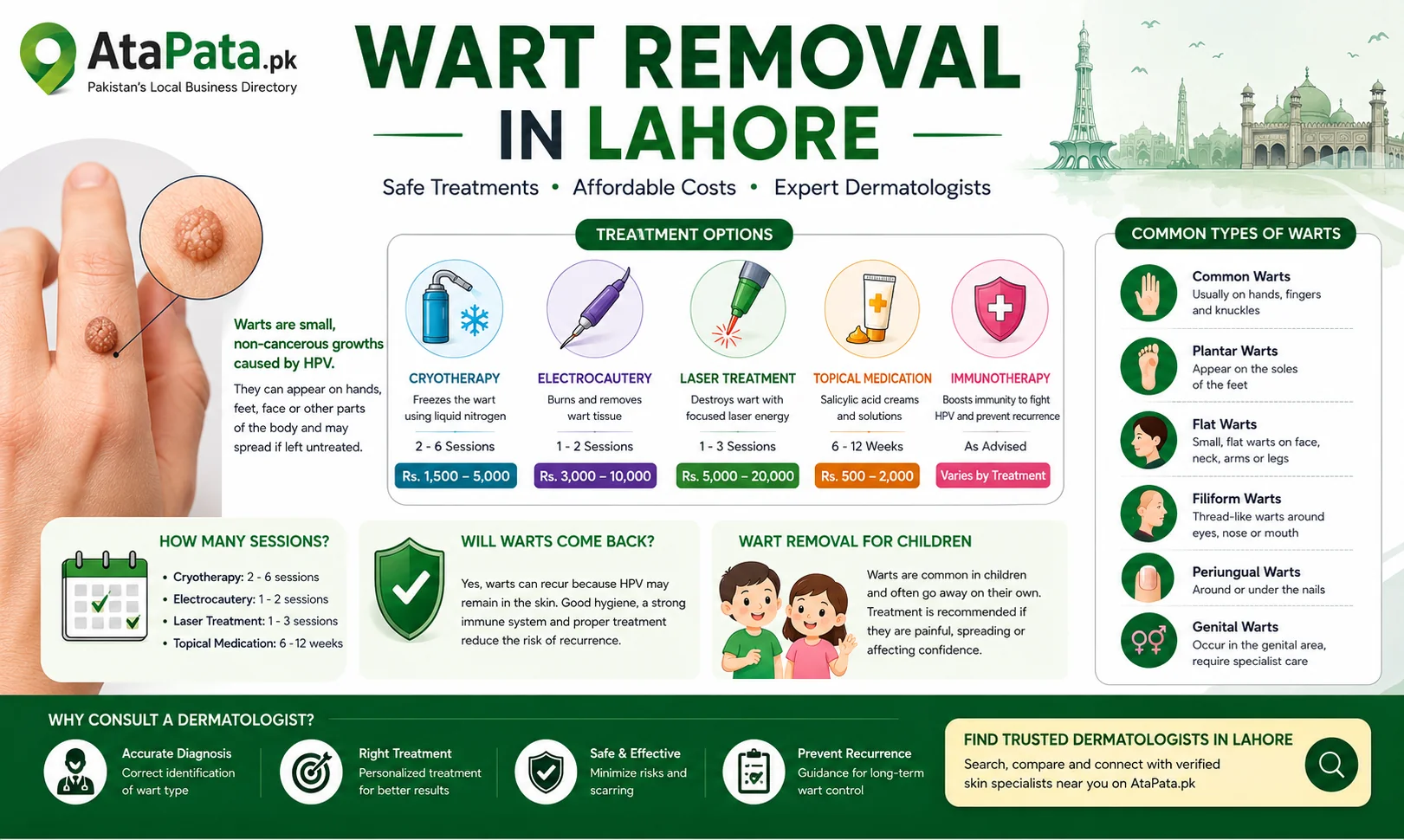
Dermatologists in Lahore treat several different types of warts, each varying in appearance, location and recommended treatment.
- Common Warts (Verruca vulgaris): Rough, raised growths that typically develop on the hands, fingers and around the knuckles. They are the most frequently diagnosed type of wart.
- Plantar Warts: Found on the soles of the feet, these warts often grow inward due to body weight and can become painful when standing or walking.
- Flat Warts (Verruca plana): Small, smooth warts that usually appear in clusters on the face, neck, arms or legs. They are more commonly seen in children and young adults.
- Filiform Warts: Thin, finger-like growths that develop around the eyes, nose or mouth. Because they can spread quickly, early treatment is recommended.
- Periungual Warts: Warts that grow around or underneath the fingernails and toenails. If left untreated, they may interfere with normal nail growth.
- Genital Warts: Caused by specific strains of HPV, these warts appear in the genital or anal region and require assessment and treatment by an appropriately qualified healthcare professional.
Wart Removal Treatments Available in Lahore
There is no single treatment that works for every wart. The best option depends on factors such as the type of wart, its size and location, how long it has been present, and whether previous treatments have failed. After examining the affected area, a dermatologist will recommend the most appropriate treatment plan.
Cryotherapy (Liquid Nitrogen)
Cryotherapy is one of the most commonly performed wart removal procedures. During treatment, liquid nitrogen is applied directly to the wart, freezing and destroying the infected skin cells. Over the following days, the treated tissue forms a blister, dries up and gradually falls away as healthy skin replaces it.
- Recommended for: Common warts, plantar warts and periungual warts.
- Treatment sessions: Usually 2-6 sessions, depending on the wart's size and response.
- Estimated cost: Approximately Rs. 1,500 - 5,000 per session.
- Recovery: Mild redness or blistering is common and usually settles within a few days.
Electrocautery (Electrosurgery)
Electrocautery removes warts using a controlled electrical current after the area has been numbed with a local anaesthetic. It is often recommended for larger or stubborn warts that have not responded to simpler treatments.
- Recommended for: Large, thick or treatment-resistant warts.
- Treatment sessions: Most patients require only one session, although larger lesions may need follow-up.
- Estimated cost: Approximately Rs. 3,000 - 10,000 per procedure.
Laser Wart Removal
Laser therapy uses concentrated light energy to destroy wart tissue while minimising damage to the surrounding skin. It is commonly considered for recurrent warts or those located on cosmetically sensitive areas such as the face.
- Recommended for: Recurrent, multiple or facial warts.
- Benefits: Precise treatment with a lower risk of scarring in suitable cases.
- Estimated cost: Approximately Rs. 5,000 - 20,000 per session.
Topical Medications
Prescription or over-the-counter preparations containing salicylic acid gradually soften and remove wart tissue over several weeks. Although slower than procedural treatments, they can be effective for smaller warts when used consistently under medical guidance.
- Recommended for: Small, uncomplicated warts.
- Treatment duration: Usually 6-12 weeks of regular application.
- Estimated cost: Approximately Rs. 500 - 2,000, depending on the medication prescribed.
Immunotherapy
For persistent or recurrent warts, some dermatologists may recommend immunotherapy. Rather than destroying the wart directly, this treatment stimulates the body's immune system to recognise and eliminate the HPV infection. It is generally reserved for difficult cases that have not responded to conventional treatments.
Surgical Removal
Surgical excision involves removing the wart under local anaesthesia using minor surgical techniques. Because it carries a higher risk of scarring, it is usually reserved for large, solitary or treatment-resistant warts when other treatment options are unlikely to be effective.
Which Treatment Is Right for You?
The choice of treatment depends on several factors, including the type of wart, its location, your age and your medical history. While cryotherapy is often the first-line treatment, stubborn or recurrent warts may require laser therapy, electrocautery or immunotherapy. A dermatologist can assess your condition and recommend the most suitable approach for achieving the best outcome with the lowest risk of recurrence.
Wart Removal Cost in Lahore 2026
- Dermatologist consultation: Rs. 1,000 to Rs. 3,000
- Cryotherapy: Rs. 1,500 to Rs. 5,000 per session
- Electrocautery: Rs. 3,000 to Rs. 10,000 per session
- Laser wart removal: Rs. 5,000 to Rs. 20,000 per session
- Salicylic acid prescription: Rs. 500 to Rs. 2,000
Treatment costs can vary depending on the clinic, the dermatologist's experience, the type of procedure and the number of warts being treated. Clinics in areas such as DHA and Gulberg may charge higher consultation and procedure fees, while clinics in Johar Town, Township and Iqbal Town often offer more budget-friendly options. Before beginning treatment, ask your dermatologist about the expected number of sessions and the total estimated cost.
How Long Does Wart Removal Take?
The duration of treatment depends on the type of wart, its size, its location and the treatment method chosen. Some patients notice improvement after a single visit, while others require multiple sessions to completely remove the wart.
- Cryotherapy: Usually 2-6 sessions, spaced every 2-3 weeks.
- Electrocautery: Most patients require 1-2 sessions.
- Laser Treatment: Typically 1-3 sessions, depending on the severity of the wart.
- Topical Medications: Daily application for approximately 6-12 weeks.
Plantar and periungual warts often require additional treatment because they tend to grow deeper into the skin and are generally more resistant than common warts.
Can Warts Return After Treatment?
Yes. Even after a wart has been successfully removed, the Human Papillomavirus (HPV) may remain inactive in the surrounding skin. As a result, some people experience recurrence weeks or months after treatment. While no treatment can completely eliminate the risk of recurrence, professional treatment significantly reduces the chances of the wart returning.
You can also lower the risk of recurrence by:
- Avoiding picking or scratching existing warts.
- Not sharing towels, footwear or personal grooming items.
- Keeping feet clean and dry, especially after using public swimming pools or gym facilities.
- Seeking treatment early before the wart spreads to nearby skin.
Wart Removal for Children
Warts are particularly common in school-age children because they are more likely to have close skin contact during play and their immune systems are still developing immunity to HPV. Many childhood warts disappear naturally over time, but medical treatment may be recommended if the wart is causing discomfort or continues to spread.
Consider consulting a dermatologist if:
- The wart is painful or interferes with walking, writing or daily activities.
- Multiple new warts continue to appear.
- The wart is located on the face or another cosmetically sensitive area.
- Home treatments have not worked after several weeks.
Cryotherapy is commonly used for children and is generally well tolerated when performed by an experienced dermatologist. Parents should avoid attempting to cut, burn or remove a child's wart at home, as doing so can increase the risk of infection and permanent scarring.
How to Prevent Warts
- Never share towels, razors, socks or footwear with others
- Wear flip flops in public bathrooms, gyms and swimming pool areas
- Keep skin clean and dry - HPV thrives in warm, moist environments
- Do not pick or scratch warts - this spreads the virus to other parts of the body
- Cover warts with a bandage to prevent spreading to others
- Maintain a strong immune system - eat well, sleep adequately and exercise regularly
Frequently Asked Questions About Wart Removal in Lahore
Can warts spread to family members?
Yes. Warts are caused by the Human Papillomavirus (HPV), which can spread through direct skin-to-skin contact or by sharing personal items such as towels, razors, socks and footwear. While not everyone exposed to the virus develops warts, maintaining good hygiene and avoiding shared personal items can help reduce the risk of transmission within the household.
Is laser treatment better than cryotherapy?
It depends on the type, size and location of the wart. Cryotherapy is usually the first-line treatment for common and plantar warts because it is effective, widely available and relatively affordable. Laser treatment is often recommended for stubborn, recurrent or multiple warts that have not responded to other treatments. Your dermatologist will recommend the most appropriate option after examining the wart.
Can facial warts be removed safely?
Yes. Facial warts can usually be removed safely by a qualified dermatologist using treatments such as laser therapy, cryotherapy or carefully selected topical medications. Because facial skin is delicate, avoid attempting to cut, burn or remove facial warts at home, as this can lead to scarring or infection.
Are wart removal creams effective?
Over-the-counter creams and solutions containing salicylic acid can be effective for small, uncomplicated warts when used consistently over several weeks. However, they are generally less effective for larger, deeper or long-standing warts. If home treatment does not improve the wart or it continues to spread, consult a dermatologist for professional treatment.
Can diabetes affect wart treatment?
Yes. People with diabetes should avoid self-treating warts, particularly on the feet, as reduced circulation and slower wound healing increase the risk of infection and complications. If you have diabetes and develop a wart, seek advice from a dermatologist or your healthcare provider before starting any treatment.
Is wart removal painful?
Cryotherapy causes a brief stinging or burning sensation during the procedure - most patients find it tolerable. Electrocautery is performed under local anesthetic so the procedure itself is painless. There may be mild discomfort during healing. Laser treatment is well tolerated with topical anesthetic cream applied beforehand.
Do warts go away on their own?
Yes, some warts, particularly in children and young adults with healthy immune systems, resolve on their own within 1-2 years. However treatment speeds up resolution, prevents spreading and reduces discomfort. Warts on the face and genitals should always be treated promptly by a dermatologist.
How long does healing take after wart removal in Lahore?
After cryotherapy or electrocautery the treated area typically heals within 1-2 weeks. A blister may form after cryotherapy - do not pop it. Keep the area clean and dry. Your dermatologist will advise on aftercare specific to your treatment.
Find Dermatologists for Wart Removal in Lahore on AtaPata
Browse verified dermatologists offering wart removal in Lahore on AtaPata - Pakistan's local business directory. Find skin specialists with contact numbers, addresses and opening hours.
- Dermatologists in Lahore
- Dermatologists in DHA Lahore
- Dermatologists in Gulberg Lahore
- Dermatologists in Johar Town Lahore
Browse trusted Dermatology Clinics in Lahore offering wart removal on AtaPata, Pakistan's local business directory. Find skin specialists with contact numbers, addresses and opening hours near you.
- Dermatology Clinics in Lahore
- Dermatology Clinics in Valencia Lahore
- Dermatology Clinics in DHA Lahore
- Dermatology Clinics in Johar Town Lahore
Looking Outside Lahore?
- Dermatologists in Karachi
- Dermatologists in Islamabad
- Dermatologists in Multan
- Dermatologists in Faisalabad
- Dermatologists in Rawalpindi
- Dermatologists in Peshawar
- Dermatologists in Quetta
Part of AtaPata's Healthcare Guide Series
We're publishing a growing series of healthcare guides covering doctors, hospitals, diagnostic laboratories and health services across Pakistan. Each guide is carefully researched to help patients make informed decisions.
Continue reading our latest guides below:
- Best Ultrasound Centers in Multan: Services, Prices & How to Choose
- Best Dermatologists in Karachi: Top Skin Specialists in 2026
- PRP Treatment for Face in Pakistan: Benefits, Procedure, Cost and FAQs
- Best Cardiologist in Lahore: Top Heart Specialists and Hospitals in 2026
- Wart Removal in Karachi: Treatments, Costs & Dermatologists
- How to Control Blood Sugar in Pakistan: 6 Simple Tips for Diabetics in 2026
- Hydrafacial in Islamabad: Cost, Benefits and Steps
- Acne Treatment in Multan: Best Dermatologists, Clinics , and Procedure
- Laser Hair Removal in Pakistan: Cost, Clinics and What to Expect
- Homeopathic Store Near Me: Find Homeopathic Pharmacies Across Pakistan
- Best Dermatologists in Lahore: Top Skin Specialists in 2026
- Best Diagnostic Labs in Pakistan 2026: A Complete Guide
- A Complete Guide to different Types of Medical Laboratories and Diagnostic Centers in Pakistan
- Types of Hospitals in Pakistan
- Sick in Pakistan? Which Specialist Do You Need?