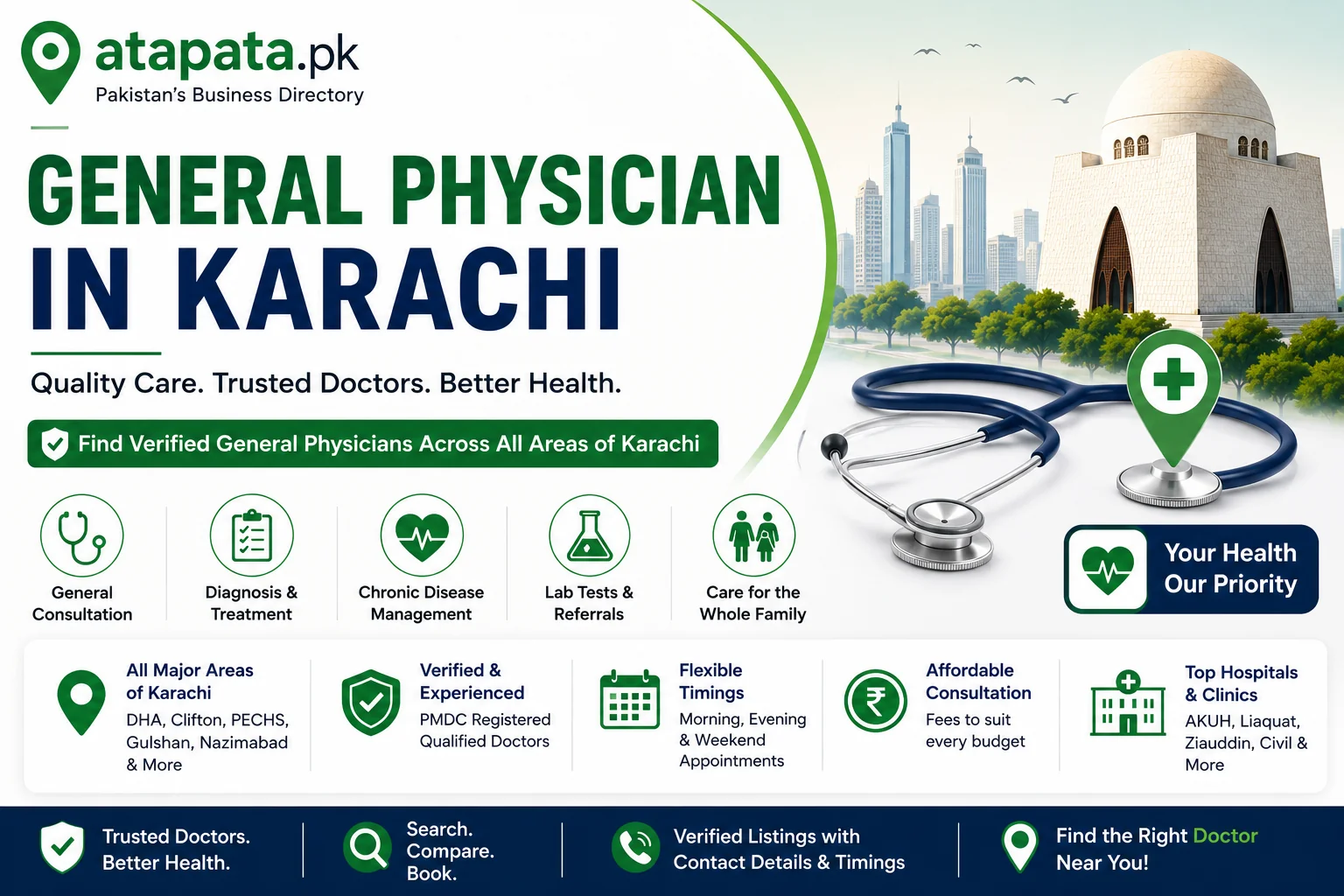
When you're unwell, the first question is often — which doctor should I see? In Pakistan, medical specialists are divided into many fields, and visiting the wrong one can waste time and money. This guide explains every major type of doctor available in Pakistan, what they treat, and when to visit them.
General Physician (GP)
A General Physician — also called a family doctor or GP — is your first point of contact for most health concerns. They treat common illnesses like fever, flu, infections, blood pressure, and diabetes. If your condition is more complex, a GP will refer you to a specialist.
When to visit: Fever, cough, flu, general body pain, routine checkups, blood pressure monitoring.
Dermatologist — Skin Specialist
A Dermatologist specialises in conditions affecting the skin, hair, and nails. In Pakistan they are commonly called a skin specialist. They treat acne, eczema, psoriasis, hair loss, skin whitening concerns, fungal infections, and warts.
When to visit: Acne, skin rashes, hair thinning or loss, skin allergies, pigmentation issues.
Cardiologist — Heart Specialist
A Cardiologist diagnoses and treats heart conditions medically — without surgery. They manage conditions like high blood pressure, heart failure, irregular heartbeat, and blocked arteries through medication and lifestyle changes.
When to visit: Chest pain, shortness of breath, high blood pressure, palpitations, family history of heart disease.
Cardiac Surgeon
A Cardiac Surgeon performs operations on the heart. Unlike a Cardiologist who manages heart conditions medically, a Cardiac Surgeon performs bypass surgery, valve replacement, and other heart procedures.
When to visit: When your Cardiologist recommends surgery for blocked arteries, heart valve problems, or congenital heart defects.
Neurologist — Brain and Nerve Specialist
A Neurologist treats conditions affecting the brain, spinal cord, and nerves. Common conditions include migraines, epilepsy, Parkinson's disease, stroke, and multiple sclerosis.
When to visit: Severe headaches, seizures, memory loss, numbness or tingling, dizziness, tremors.
Neurosurgeon
A Neurosurgeon performs surgery on the brain and spinal cord. They handle brain tumours, spinal disc problems, and severe nerve compression that requires surgical intervention.
When to visit: When a Neurologist recommends surgery for a brain or spine condition.
Gynecologist — Women's Health Specialist
A Gynecologist specialises in women's reproductive health. In Pakistan they are sometimes called a lady doctor. They handle pregnancy, childbirth, menstrual disorders, fertility issues, and menopause.
When to visit: Pregnancy, irregular periods, fertility concerns, PCOS, menopause, routine women's health checkups.
Pediatrician — Child Specialist
A Pediatrician is a doctor who specialises in the health of infants, children, and teenagers. In Pakistan they are commonly called a child specialist or bacho ka doctor.
When to visit: Any health concern for children from birth to 18 years — vaccinations, growth monitoring, fever, infections.
Psychiatrist — Mental Health Specialist
A Psychiatrist is a medical doctor who diagnoses and treats mental health conditions. They can prescribe medication for depression, anxiety, schizophrenia, bipolar disorder, and addiction. Mental health is often overlooked in Pakistan — but visiting a psychiatrist is a sign of strength, not weakness.
When to visit: Depression, severe anxiety, mood swings, sleep disorders, addiction, psychosis.
Psychologist
A Psychologist provides therapy and counselling for mental health issues but cannot prescribe medication. They use talk therapy, cognitive behavioural therapy (CBT), and other techniques to help patients manage their mental health.
When to visit: Stress, relationship issues, mild to moderate depression or anxiety, trauma, behavioural issues in children.
Orthopedic — Bone and Joint Specialist
An Orthopedic doctor treats conditions affecting the bones, joints, muscles, and ligaments. In Pakistan they are sometimes called a haddi ka doctor. They treat fractures, arthritis, back pain, sports injuries, and joint problems.
When to visit: Bone fractures, joint pain, back or neck pain, sports injuries, knee or hip problems.
Orthopedic Surgeon
An Orthopedic Surgeon performs surgical procedures on bones and joints — including joint replacement, fracture repair, and spine surgery. Not every orthopedic condition requires surgery — your orthopedic doctor will advise if surgery is needed.
ENT Specialist — Ear, Nose and Throat Doctor
An ENT Specialist treats conditions affecting the ears, nose, and throat. In Pakistan they are commonly called a kan naak gala ka doctor. They treat hearing loss, sinus problems, tonsillitis, and voice disorders.
When to visit: Ear pain or hearing loss, chronic sinus problems, tonsil issues, snoring, voice problems, nose bleeds.
Eye Specialist — Ophthalmologist
An Eye Specialist — also called an Ophthalmologist — diagnoses and treats eye conditions. In Pakistan they are commonly called an aankhon ka doctor. They treat cataracts, glaucoma, retinal diseases, and perform eye surgery.
When to visit: Blurred vision, eye pain, redness, cataracts, glaucoma, diabetic eye disease.
Optometrist vs Ophthalmologist
Many people confuse these two. An Optometrist checks your vision and prescribes glasses or contact lenses but is not a medical doctor. An Ophthalmologist is a fully qualified medical doctor who can diagnose eye diseases and perform surgery. For glasses — visit an Optometrist. For eye disease — visit an Ophthalmologist.
Gastroenterologist — Stomach and Digestive Specialist
A Gastroenterologist treats conditions affecting the digestive system — stomach, intestines, liver, and gallbladder. Common conditions include acidity, IBS, hepatitis, and stomach ulcers.
When to visit: Chronic acidity, stomach pain, IBS, hepatitis, jaundice, blood in stool, difficulty swallowing.
Pulmonologist — Lung Specialist
A Pulmonologist — also called a chest specialist — treats conditions affecting the lungs and respiratory system. They manage asthma, tuberculosis (TB), COPD, and pneumonia.
When to visit: Chronic cough, asthma, shortness of breath, TB, chest infections, sleep apnoea.
Endocrinologist — Hormone Specialist
An Endocrinologist treats hormone-related conditions. The most common reason to visit one in Pakistan is diabetes management. They also treat thyroid disorders, PCOS, and growth disorders.
When to visit: Diabetes, thyroid problems, PCOS, obesity related to hormones, growth issues.
Nephrologist — Kidney Specialist
A Nephrologist treats kidney diseases. Kidney problems are common in Pakistan due to diabetes and high blood pressure. They manage chronic kidney disease, kidney stones, and dialysis.
When to visit: Kidney stones, swelling in legs, blood in urine, high creatinine levels, dialysis management.
Urologist
A Urologist treats conditions affecting the urinary tract in both men and women — and also treats male reproductive health. They handle kidney stones, urinary infections, prostate problems, and male infertility.
When to visit: Kidney stones, urinary tract infections, prostate issues, male infertility, incontinence.
Oncologist — Cancer Specialist
An Oncologist diagnoses and treats cancer medically through chemotherapy, immunotherapy, and targeted therapy. A Surgical Oncologist performs surgery to remove tumours.
When to visit: Cancer diagnosis, cancer treatment, follow-up after cancer surgery.
Rheumatologist — Joint and Autoimmune Specialist
A Rheumatologist treats autoimmune and inflammatory conditions affecting joints, muscles, and connective tissue — such as rheumatoid arthritis, lupus, and gout.
When to visit: Joint swelling and pain, morning stiffness, suspected arthritis, lupus, gout.
Physiotherapist
A Physiotherapist helps patients recover from injuries, surgeries, and chronic pain through physical exercises, manual therapy, and rehabilitation. They do not prescribe medication.
When to visit: Post-surgery rehabilitation, sports injuries, back pain, stroke recovery, joint stiffness.
Homeopath
A Homeopath practices homeopathy — an alternative medicine system using highly diluted substances to treat illness. Homeopathy is widely practiced and trusted in Pakistan, particularly in smaller cities and for chronic conditions.
Hakeem — Herbal Medicine Practitioner
A Hakeem practices Unani or herbal medicine — a traditional system of medicine with roots in ancient Greek and Islamic medicine. Hakim are widely available across Pakistan and commonly consulted for chronic conditions, skin issues, and general wellness.
Nutritionist and Dietitian
A Nutritionist or Dietitian provides guidance on diet and nutrition for weight management, diabetes, heart disease, and general health. They are not medical doctors but play an important role in preventive healthcare.
Speech Therapist
A Speech Therapist helps patients with speech, language, and swallowing difficulties. They work with children who have delayed speech development, adults recovering from stroke, and people with stammering or voice disorders.
Audiologist
An Audiologist diagnoses and treats hearing and balance disorders. They conduct hearing tests, fit hearing aids, and help patients with tinnitus (ringing in the ears).
Fertility Specialist
A Fertility Specialist — also called a Reproductive Endocrinologist — treats infertility in both men and women. They perform IVF (in vitro fertilisation), IUI, and other assisted reproduction procedures.
When to visit: Difficulty conceiving after one year of trying, recurrent miscarriage, PCOS related infertility.
Find the right doctor on AtaPata
Now that you know which specialist you need, finding one near you is easy. Browse verified doctors across Lahore, Karachi, Islamabad, Rawalpindi, Multan, Faisalabad, Peshawar and Quetta on AtaPata — with contact details, clinic addresses and opening hours.
Part of AtaPata's Healthcare Guide Series
We're publishing a growing series of healthcare guides covering doctors, hospitals, diagnostic laboratories and health services across Pakistan. Each guide is carefully researched to help patients make informed decisions.
Continue reading our latest guides below:
- Best Ultrasound Centers in Multan: Services, Prices & How to Choose
- Best Dermatologists in Karachi: Top Skin Specialists in 2026
- PRP Treatment for Face in Pakistan: Benefits, Procedure, Cost and FAQs
- Best Cardiologist in Lahore: Top Heart Specialists and Hospitals in 2026
- Wart Removal in Lahore: Treatments, Costs & Dermatologists
- Wart Removal in Karachi: Treatments, Costs & Dermatologists
- How to Control Blood Sugar in Pakistan: 6 Simple Tips for Diabetics in 2026
- Hydrafacial in Islamabad: Cost, Benefits and Steps
- Acne Treatment in Multan: Best Dermatologists, Clinics , and Procedure
- Laser Hair Removal in Pakistan: Cost, Clinics and What to Expect
- Homeopathic Store Near Me: Find Homeopathic Pharmacies Across Pakistan
- Best Dermatologists in Lahore: Top Skin Specialists in 2026
- Best Diagnostic Labs in Pakistan 2026: A Complete Guide
- A Complete Guide to different Types of Medical Laboratories and Diagnostic Centers in Pakistan
- Types of Hospitals in Pakistan