Platelet-Rich Plasma (PRP) treatment for the face has become one of the most popular non-surgical cosmetic procedures in Pakistan. From aesthetic clinics in Lahore's DHA to skincare centers in Karachi, Islamabad, Rawalpindi, and other major cities, PRP facial therapy is widely offered for people looking to improve their skin naturally without surgery.
Whether you want to reduce fine lines, improve skin texture, minimize acne scars, or achieve a healthier complexion, PRP facial treatment is considered an effective option. This guide explains what PRP treatment is, how it works, its benefits, possible side effects, recovery time, cost in Pakistan, and who is a suitable candidate for the procedure.
What is PRP Treatment for the Face?
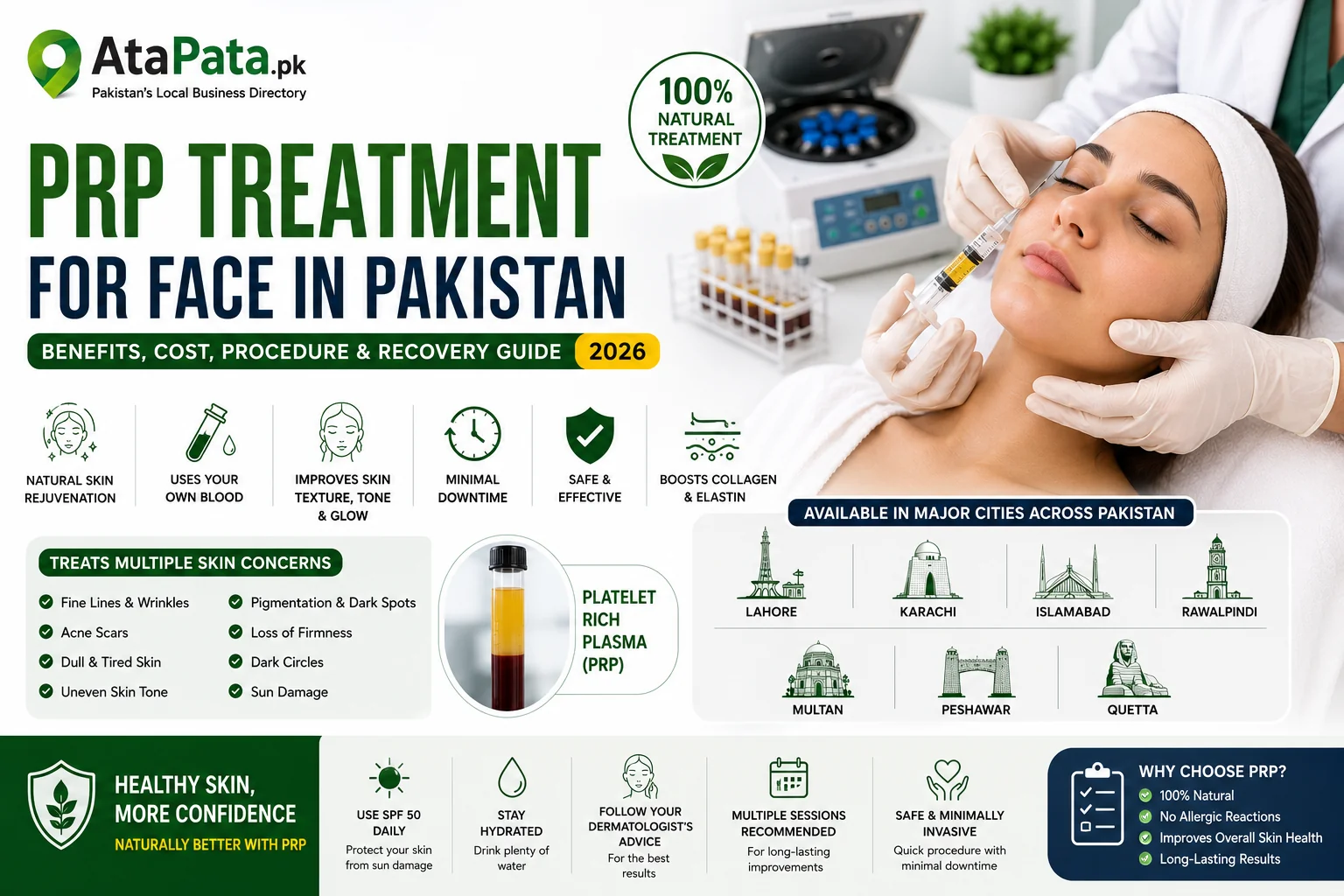
PRP (Platelet-Rich Plasma) treatment is a cosmetic procedure that uses the healing properties of your own blood to stimulate skin repair and rejuvenation. During the procedure, a small amount of blood is drawn from your arm and processed in a centrifuge to separate the platelet-rich plasma from other blood components.
The concentrated PRP contains a high level of platelets, growth factors, and proteins that play an essential role in tissue healing and cell regeneration. The platelet-rich plasma is then injected into targeted areas of the face or applied after microneedling to encourage the skin's natural healing process.
As collagen and elastin production increases, the skin gradually becomes firmer, smoother, and more youthful in appearance. Many people choose PRP facial treatment to improve skin tone, reduce wrinkles, minimize enlarged pores, fade acne scars, and restore a natural glow without the use of synthetic fillers or surgery.
PRP facial treatment is also commonly known as the Vampire Facial because it uses your own blood to promote skin regeneration. Since the treatment relies on your body's natural healing mechanisms and does not introduce foreign substances, it is generally considered a safe and minimally invasive procedure when performed by a qualified healthcare professional.
What Skin Problems Can PRP Facial Treatment Help With?
PRP facial treatment is widely used to improve a variety of common skin concerns by stimulating the body's natural healing process. The growth factors found in platelet-rich plasma encourage collagen production, tissue repair, and skin regeneration, making PRP a popular choice for people seeking natural skin rejuvenation. It may help improve the following conditions:
- Fine lines and wrinkles: PRP stimulates collagen and elastin production, helping soften the appearance of wrinkles around the eyes, forehead, and mouth.
- Acne scars: One of the most common reasons people choose PRP facial treatment. It can help improve the appearance of atrophic and pitted acne scars by promoting new collagen formation.
- Dull and tired-looking skin: PRP helps restore a healthier complexion by improving skin vitality, hydration, and overall radiance.
- Uneven skin tone and texture: Regular PRP sessions may improve rough skin texture and promote a smoother, more even skin surface.
- Hyperpigmentation and dark spots: When combined with treatments such as microneedling or laser therapy, PRP may help reduce the appearance of post-inflammatory pigmentation and sun spots.
- Loss of skin firmness: Increased collagen production can improve skin elasticity and help restore a firmer, more youthful appearance.
- Dark circles and under-eye hollows: PRP injections around the eye area may improve skin quality and reduce the appearance of dark circles and tear troughs in suitable candidates.
- Sun-damaged skin: PRP can support the repair of skin affected by prolonged sun exposure, helping improve texture and overall skin health.
Benefits of PRP Treatment for the Face
PRP facial treatment offers several advantages for people looking to improve their skin without surgery. Because it uses your own blood, the procedure is considered a natural approach to skin rejuvenation and is commonly recommended for individuals seeking gradual, long-lasting improvements.
- Natural skin rejuvenation: PRP uses your own platelet-rich plasma, eliminating the need for synthetic fillers or foreign substances.
- Low risk of allergic reactions: Since the plasma comes from your own blood, the risk of allergic reactions or rejection is extremely low.
- Boosts collagen production: The treatment stimulates natural collagen and elastin formation, leading to healthier, firmer, and smoother skin over time.
- Minimally invasive procedure: PRP involves small injections or application after microneedling, with no surgery, stitches, or lengthy recovery period.
- Minimal downtime: Most people can resume their normal daily activities within one to two days after treatment.
- Suitable for most skin types: PRP is generally considered suitable for a wide range of skin tones and types when performed by a qualified medical professional.
- Can be combined with other treatments: PRP is frequently used alongside microneedling, laser resurfacing, or other aesthetic procedures to enhance overall results.
- Natural-looking, long-lasting results: Improvements develop gradually as collagen production increases, with results often lasting several months depending on individual factors and maintenance treatments.
PRP Treatment Procedure: Step by Step
Here is exactly what happens during a PRP facial treatment session at a dermatology clinic in Pakistan:
Step 1: Consultation
Your dermatologist or aesthetic physician will assess your skin, discuss your concerns, and determine whether PRP is suitable for you. They will review your medical history and any medications you are taking.
Step 2: Blood Collection
A small amount of blood - typically 10-20ml - is drawn from your arm using a standard sterile technique. The amount is similar to a routine blood test.
Step 3: Centrifuge Processing
The drawn blood is placed in a centrifuge machine which spins at high speed to separate its components. This process separates the platelet-rich plasma from red blood cells and other components. The resulting PRP contains a concentration of platelets 5-10 times higher than normal blood.
Step 4: Skin Preparation
The treatment area is thoroughly cleansed and a topical numbing cream is applied to minimize discomfort during the procedure. The numbing cream is left on for approximately 20-30 minutes.
Step 5: PRP Application
The PRP is applied to your face using one of two methods, or a combination of both:
- Micro-injections: the PRP is injected directly into specific areas of the face using very fine needles
- Microneedling with PRP: the PRP is applied topically while a microneedling device creates tiny channels in the skin to allow deeper penetration
Step 6: Post-Treatment Care
Your doctor will provide specific aftercare instructions. You will likely experience some redness and mild swelling for 24-48 hours, this is normal and part of the healing process.
How Long Does PRP Treatment Take?
A complete PRP facial treatment session typically takes 45-90 minutes from start to finish:
- Blood collection, 5-10 minutes
- Centrifuge processing, 15-20 minutes
- Numbing cream, 20-30 minutes
- PRP application, 15-30 minutes
How Many Sessions Are Required?
For most patients a course of 3-4 sessions spaced 4-6 weeks apart is recommended for optimal results. After completing the initial course, maintenance sessions every 6-12 months help sustain the results.
The exact number of sessions depends on your specific skin concerns, age, and the results you want to achieve. Your dermatologist will recommend a personalised treatment plan during consultation.
How Long Do PRP Results Last?
Results from PRP treatment typically begin to show 2-3 weeks after the first session as collagen production increases. The full effects are usually visible after 3-6 months.
A single PRP session produces results that last approximately 6-12 months. After completing a full course of 3-4 sessions the results can last 12-18 months or longer with proper skincare maintenance.
Individual results vary depending on age, skin condition, lifestyle factors, and sun exposure, which is particularly important in Pakistan's climate.
Who is a Good Candidate for PRP?
PRP treatment is suitable for most healthy adults. You are a good candidate if you:
- Want to improve skin texture, tone or radiance
- Have acne scars or post-inflammatory marks
- Are beginning to notice fine lines or early signs of ageing
- Want a natural, non-surgical approach to skin rejuvenation
- Are in good overall health
PRP may not be suitable if you:
- Have a blood disorder or are on blood thinning medication
- Have active skin infection or inflammation
- Are pregnant or breastfeeding
- Have a history of skin cancer
- Have certain autoimmune conditions
Always consult a qualified dermatologist before proceeding with any cosmetic procedure.
What is the Cost of PRP Treatment for Face in Pakistan?
PRP treatment costs in Pakistan vary significantly depending on the city, clinic, and doctor's experience:
- Lahore: Rs. 8,000 to Rs. 25,000 per session
- Karachi: Rs. 10,000 to Rs. 30,000 per session
- Islamabad: Rs. 10,000 to Rs. 28,000 per session
- Other cities: Rs. 6,000 to Rs. 18,000 per session
Premium aesthetic clinics in DHA Lahore, Clifton Karachi and F-7 Islamabad tend to charge at the higher end of the range. A full course of 3-4 sessions can cost Rs. 25,000 to Rs. 100,000+ depending on the clinic and your specific treatment plan.
PRP vs Other Skin Treatments: Which One is Right for You?
PRP facial treatment is just one of several options available for skin rejuvenation. The right treatment depends on your skin concerns, desired results, and your dermatologist's recommendations. Here's how PRP compares with some of the most common cosmetic procedures.
PRP vs Chemical Peel
Chemical peels work by removing the outer layer of damaged skin, making them effective for treating mild pigmentation, sun damage, and uneven skin tone. PRP, on the other hand, works beneath the skin by stimulating collagen production and natural tissue repair. It is generally better suited for improving acne scars, fine lines, skin texture, and overall skin quality.
Many dermatology clinics combine PRP with chemical peels to achieve more comprehensive skin rejuvenation.
PRP vs Botox
Botox and PRP serve different purposes and are often used together rather than as alternatives. Botox relaxes facial muscles to reduce expression lines such as forehead wrinkles, crow's feet, and frown lines. PRP improves skin quality by encouraging collagen production, making the skin firmer, smoother, and healthier.
If your primary concern is dynamic wrinkles caused by facial movement, Botox may be more suitable. If you want overall skin rejuvenation and improved texture, PRP is often the preferred choice.
PRP vs Dermal Fillers
Dermal fillers are designed to restore lost facial volume in areas such as the cheeks, lips, jawline, and under-eye region. PRP does not replace volume but instead improves the condition of the skin by stimulating natural collagen and elastin production.
Because they address different concerns, PRP and dermal fillers are frequently combined to achieve both facial rejuvenation and volume restoration.
PRP vs Laser Skin Treatment
Laser treatments resurface the skin and are commonly used to treat pigmentation, acne scars, wrinkles, and sun damage. They often produce faster visible results but usually involve a longer recovery period.
PRP offers a gentler approach with minimal downtime, although improvements develop gradually as collagen production increases over several weeks. Many dermatologists recommend combining laser therapy with PRP to enhance healing and maximize treatment results.
PRP Facial Aftercare: What to Do and What to Avoid
Proper aftercare plays an important role in achieving the best possible results from PRP facial treatment. Following your dermatologist's instructions can help reduce irritation and support faster healing.
What to Do After PRP Treatment
- Keep the treated area clean and avoid unnecessary touching during the first 24 hours.
- Apply only the creams, serums, or medications recommended by your dermatologist.
- Drink plenty of water to stay hydrated and support your body's natural healing process.
- Apply a broad-spectrum sunscreen (SPF 50 or higher) whenever you go outdoors to protect your skin from UV damage.
- Sleep on a clean pillowcase and avoid placing excessive pressure on your face during the first night.
What to Avoid for the First 24–48 Hours
- Avoid wearing makeup until your dermatologist advises it is safe.
- Stay out of direct sunlight and avoid prolonged sun exposure.
- Do not perform strenuous exercise or activities that cause excessive sweating.
- Avoid alcohol consumption, as it may contribute to dehydration and slow the healing process.
- Do not use swimming pools, hot tubs, saunas, or steam rooms during the initial recovery period.
- Avoid rubbing, scratching, or massaging the treated area unless instructed by your healthcare provider.
FAQs about PRP Treatment for Face in Pakistan
Is PRP treatment painful?
Most patients experience minimal discomfort. A topical numbing cream is applied before the procedure to ensure comfort. You may feel some pressure or a mild stinging sensation during the injections but the procedure is generally well tolerated.
Is PRP safe for Pakistani skin tones?
Yes. PRP is particularly well suited for Pakistani and South Asian skin tones. Unlike some laser treatments that carry a risk of post-inflammatory hyperpigmentation on darker skin, PRP uses your own blood and carries no such risk. It is safe and effective on all South Asian skin types.
Can PRP be combined with other treatments?
Yes. PRP is frequently combined with microneedling, laser resurfacing, chemical peels and dermal fillers for enhanced results. Your dermatologist will recommend the best combination based on your specific concerns.
How soon will I see results?
Most patients notice an improvement in skin radiance and texture within 2-3 weeks of the first session. More significant improvements in scars, wrinkles and overall skin quality become visible over 3-6 months as collagen production increases.
Is PRP good for acne scars?
Yes. PRP combined with microneedling is one of the most effective treatments for acne scars available in Pakistan. The growth factors in PRP stimulate tissue repair and collagen production which gradually fills and smooths depressed acne scars.
Can PRP help with hair loss?
Yes. PRP is also widely used for hair loss treatment. PRP injections into the scalp stimulate dormant hair follicles and can reduce hair thinning. Hair PRP is a separate procedure from facial PRP but uses the same principle.
Is PRP treatment permanent?
PRP produces long-lasting but not permanent results. The effects typically last 6-18 months depending on the number of sessions completed and individual factors. Maintenance sessions help sustain results over the long term.
What is the difference between PRP and a Vampire Facial?
A Vampire Facial is a specific type of PRP treatment where PRP is combined with microneedling. The PRP is applied topically while microneedling creates tiny channels for deeper penetration. It is named Vampire Facial because of the blood-based treatment and the temporary reddened appearance of the skin immediately after. A regular PRP facial uses injections rather than microneedling.
Can I wear makeup after PRP?
It is recommended to avoid makeup for at least 24 hours after PRP treatment to allow the skin to heal. Your dermatologist will advise when it is safe to resume your normal skincare and makeup routine.
Is PRP effective for skin whitening?
PRP is not specifically a skin whitening treatment. However it can improve overall skin brightness, radiance, and even out skin tone. If skin whitening is your primary concern your dermatologist may recommend alternative or complementary treatments such as chemical peels or laser toning.
Find a Dermatologist for PRP Treatment Near You
PRP facial treatment should always be performed by a qualified dermatologist or aesthetic physician, not at a salon or beauty parlor. In Pakistan, look for a doctor with FCPS (Dermatology) qualification or equivalent and verify they are registered with the Pakistan Medical and Dental Council (PMDC).
Browse dermatologists offering PRP and other skin treatments across Lahore, Karachi, Islamabad, Rawalpindi, Multan, Faisalabad, Peshawar and Quetta on AtaPata, with clinic addresses, contact numbers and opening hours.
- Dermatologists in Lahore
- Dermatologists in Karachi
- Dermatologists in Islamabad
- Dermatologists in Rawalpindi
- Dermatologists in Multan
- Dermatologists in Faisalabad
- Dermatologists in Peshawar
- Dermatologists in Quetta
Browse Aesthetic Physician near you on Atapata.
- Aesthetic Physician in Lahore
- Aesthetic Physician in Karachi
- Aesthetic Physician in Islamabad
- Aesthetic Physician in Rawalpindi
- Aesthetic Physician in Multan
- Aesthetic Physician in Faisalabad
- Aesthetic Physician in Peshawar
- Aesthetic Physician in Quetta
Browse Dermatology Clinics across major cities in Pakistan on Atapata.
- Dermatology Clinics in Lahore
- Dermatology Clinics in Karachi
- Dermatology Clinics in Islamabad
- Dermatology Clinics in Rawalpindi
- Dermatology Clinics in Multan
- Dermatology Clinics in Faisalabad
- Dermatology Clinics in Peshawar
- Dermatology Clinics in Quetta
Part of AtaPata's Healthcare Guide Series
We're publishing a growing series of healthcare guides covering doctors, hospitals, diagnostic laboratories and health services across Pakistan. Each guide is carefully researched to help patients make informed decisions.
Continue reading our latest guides below:
- Best Ultrasound Centers in Multan: Services, Prices & How to Choose
- Best Dermatologists in Karachi: Top Skin Specialists in 2026
- Best Cardiologist in Lahore: Top Heart Specialists and Hospitals in 2026
- Wart Removal in Lahore: Treatments, Costs & Dermatologists
- Wart Removal in Karachi: Treatments, Costs & Dermatologists
- How to Control Blood Sugar in Pakistan: 6 Simple Tips for Diabetics in 2026
- Hydrafacial in Islamabad: Cost, Benefits and Steps
- Acne Treatment in Multan: Best Dermatologists, Clinics , and Procedure
- Laser Hair Removal in Pakistan: Cost, Clinics and What to Expect
- Homeopathic Store Near Me: Find Homeopathic Pharmacies Across Pakistan
- Best Dermatologists in Lahore: Top Skin Specialists in 2026
- Best Diagnostic Labs in Pakistan 2026: A Complete Guide
- A Complete Guide to different Types of Medical Laboratories and Diagnostic Centers in Pakistan
- Types of Hospitals in Pakistan
- Sick in Pakistan? Which Specialist Do You Need?